


Law 4/2026 and the Italian FER Single Code: what changes for agrivoltaics and suitable areas
Italian Law 4/2026 and the FER Single Code reshape the rules for suitable areas and agrivoltaics: here's what changes for renewable plant developers.
Italian version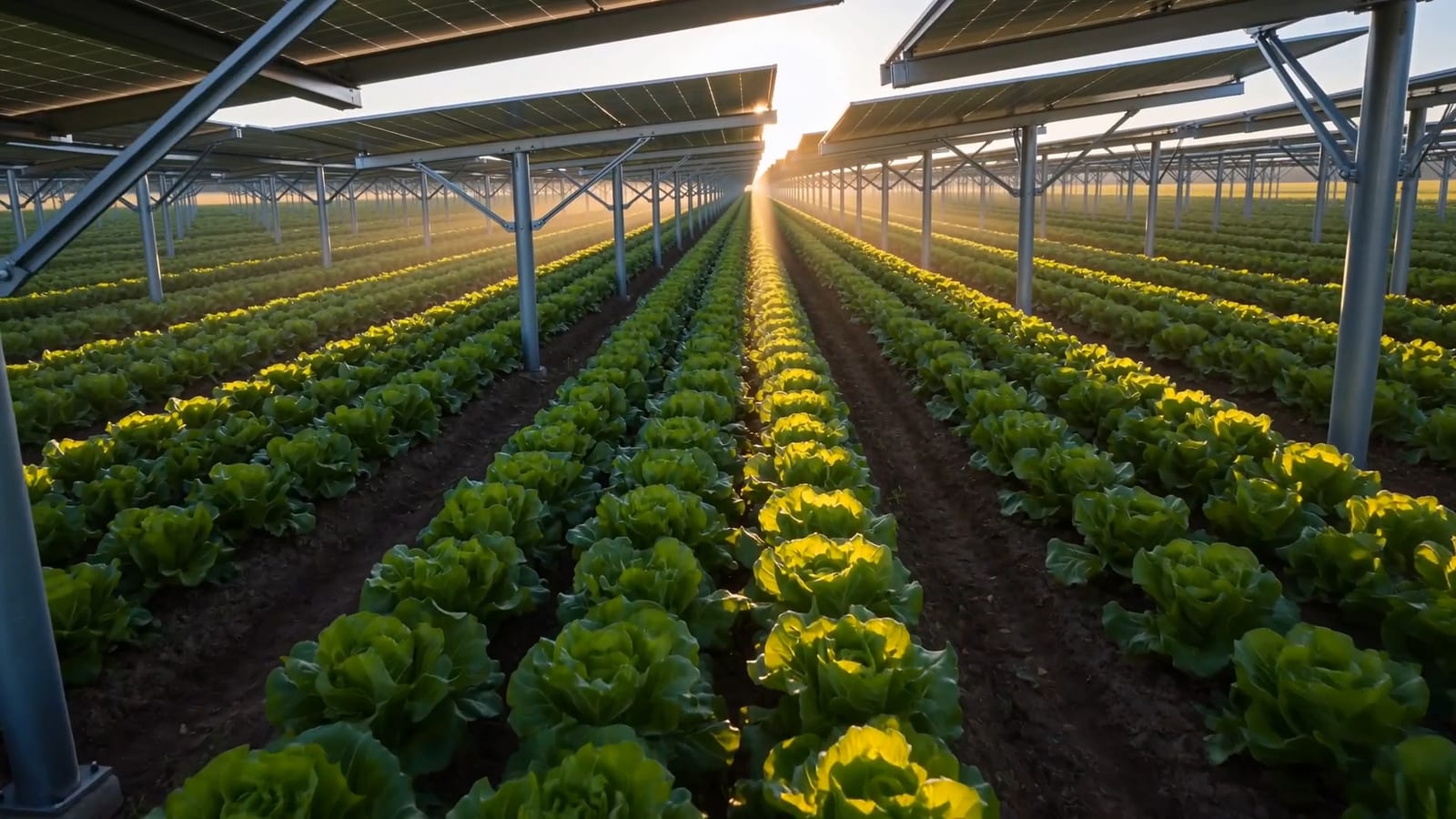
What is Italian Law 4/2026 on the FER Single Code
Italian Law 4/2026, which adopts the FER Single Code (Testo Unico Fonti Energetiche Rinnovabili), is one of the most significant regulatory measures of the last few years for the development of solar in Italy.
It unifies and simplifies the authorization framework for photovoltaic and agrivoltaic plants, redefining land suitability criteria and licensing procedures to accelerate the national energy transition.
Suitable areas: the new regional perimeter
The Suitable Areas are the surfaces where renewable plants can be developed under simplified authorization procedures. The new regulation sets precise regional quotas: agricultural areas qualified as suitable must represent no less than 0.8% and no more than 3% of the SAU (Utilized Agricultural Surface), including the areas hosting agrivoltaic plants.
It is an important choice: on one hand it enables the development of new projects on agricultural land; on the other, it sets a clear cap to protect the agricultural vocation of the territory.
Agrivoltaics always allowed: the 80% requirement
One of the most relevant novelties concerns agrivoltaics, which is always allowed regardless of the area classification, provided that modules are installed at an adequate height from the ground and that the continuity of cultivation is guaranteed.
The developer must submit a sworn declaration from a qualified professional certifying the plant's ability to preserve at least 80% of the gross sellable production, ensuring the primacy of agricultural activity over energy generation.
What it means for Sunscape and landowners
For landowners, Law 4/2026 opens new opportunities: the economic value of the soil can be enhanced through an agrivoltaic plant without losing crop continuity, and with faster permitting timelines than in the past.
Thanks to the multidisciplinary expertise of its team — from technical engineering to permitting and agronomic certification — Sunscape can develop projects in full compliance with the new rules and is looking for land for photovoltaic and agrivoltaic plants, supporting landowners across all phases: from preliminary site assessment to plant commissioning.
The new regulatory framework confirms the growth trend of advanced agrivoltaics in Italy, a strategic segment for dual value generation (energy + food) and for the decarbonization of the national power system.
Suitable areas are also a priority criterion in the FER X Final Decree auctions. If you own land, find out how to sell it or lease it for solar with Sunscape.